About

Showing posts with label PORTUGAL. Show all posts

Thursday, 13 October 2011

Tavira

Tavira is a city in Tavira Municipality, Algarve, Portugal with ca. 10 607 inhabitantes.


Alfama

View of Alfama from Miradouro de Santa Luzia

Alfama (Portuguese pronunciation: [ɐɫˈfamɐ]) is the oldest district of Lisbon, spreading on the slope between the Castle of Lisbon and the Tejo river. Its name comes from the Arabic Al-hamma, meaning fountains or baths. It contains many important historical attractions, with many Fado bars and restaurants.
 Old tram in the Alfama, in front of the Museum of Decorative Arts (red house to the left)
During the times of Moorish domination, Alfama constituted the whole of the city, which later spread to the West (Baixa neighbourhood). Alfama became inhabited by the fishermen and the poor, and its condition as the neighbourhood of the poor continues to this day. The great 1755 Lisbon Earthquake did not destroy the Alfama, which has remained a picturesque labyrinth of narrow streets and small squares. Lately the neighbourhood has been invigorated with the renovation of the old houses and new restaurants where Fado - Portuguese typical melancholy music - can be enjoyed.
A typical Alfama street

Overlooking the Alfama is the mediaeval Castle of São Jorge, royal residence until the early 16th century and now offering the best views of the city. In the slopes of Alfama there are other terraces (miradouros) from which to see the city, like the Miradouro de Santa Luzia, near the church of the same name and over remnants of the Moorish city walls, and the Miradouro das Portas do Sol (Gates of the Sun). Near Miradouro of Santa Luzia is located the Museum of Decorative Arts (Museu de Artes Decorativas), a 17th century mansion with magnificent interiors.

Among the churches of the Alfama are Lisbon Cathedral (12th-14th centuries), the oldest of the city and located to the West of the neighbourhood, the Convent of the Grace (Convento da Graça, 18th century), near the Castle, the mannerist Monastery of São Vicente de Fora (late 16th-18th century), where the Kings of the House of Braganza are buried, and the baroque Church of Santa Engrácia (17th century), now converted into a National Pantheon for important Portuguese personalities.


Cabo da Roca

Cabo da Roca (Cape Roca) is a cape which forms the westernmost extent of mainland Portugal and continental Europe (and by definition the Eurasian land mass). The cape is in the Portuguese municipality of Sintra, west of the district of Lisbon, forming the westernmost extent of the Serra de Sintra.
 Monument declaring Cabo da Roca as the westernmost extent of continental Europe

History
“ Aqui, onde a terra se acaba e o mar começa...[Here, where the land ends and the sea begins...] ”
Luís de Camões, Os Lusíadas

Cabo da Roca was known to the Romans as Promontorium Magnum and during the Age of Sail as the Rock of Lisbon.

The 16th century Portuguese poet Luís de Camões described Cabo da Roca as the place "where the land ends and the sea begins" (Portuguese: Onde a terra se acaba e o mar começa).
The granite boulders and sea cliffs along the coast
The invasive Carpobrotus edulis spread onto the plateau of the Cape


Funchal

A view of Funchal, taken from Pico do Cruz (261m), looking towards the east and neighboring municipality of Santa Cruz
 
Funchal (Portuguese pronunciation: [fũˈʃaɫ]) is the largest city, the municipal seat and the capital of Portugal's Autonomous Region of Madeira. The city has a population of 112,015and has been the capital of Madeira for more than five centuries.
 Harbour of Funchal

Climate
Funchal has a Mediterranean climate with mild temperatures all year round. The climate can be separated into two seasons: the rainier and slightly cooler winter with daily high temperatures averaging 20ºC (68F) and a dryer and warmer summer season with daily high temperatures averaging 25ºC (77F). Humidity levels remain constant at about 70%. Sea temperatures range from 18ºC (64F) in Winter up to 24ºC (75F) during Summer.
 Cathedral of Funchal (Sé Cathedral), constructed under the orders of D. Manuel, Duke of Beja, dating back to the 15th Century

Since the city rises from the sea up to altitudes of 800 meters on its northern slopes, it is quite common to experience cloudiness, fog and rain on those northern suburbs while clear skies remain nearer to the sea. Temperatures also tend to be slightly lower at the higher altitudes.

Early Summer, specially June, tends to be quite infamous due to a phenomena where persistent cloudiness covers the entire bay area of Funchal, locally nicknamed "Funchal's helmet".
 Penha de França, western zone of Funchal

Transportation
The harbour of Funchal is the busiest in Madeira. Cruise ships, boats and yachts call there, as it has been for many years, being also the second busiest one in Portugal, after Lisbon.

A highway provides access to Câmara de Lobos and Ribeira Brava to the west, and Santa Cruz and Machico to the east.

Madeira Airport, often known as Funchal Airport/Madeira/Santa Catarina Airport (code: FNC), is located east of the city, in the municipality of Santa Cruz. The airport was one of the most dangerous airports in the world due to the limited flat space in close proximity to cliffs, but the extension of the runway on concrete pillars in the sea has improved safety.
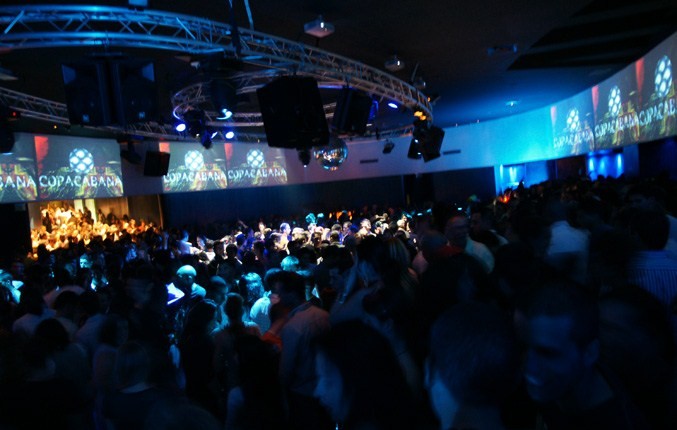
 Copacabana disco club

Tourism
Today Funchal is a major tourist town, with hotels, port, and an international airport Funchal Airport (FNC), located in the nearby municipality of Santa Cruz.

Besides the city of Funchal, tourist destinations include: Ribeira Brava, Curral das Freiras, Porto Moniz, Santana, the Laurisilva forest, a UNESCO Natural Site, in the center of Madeira Island and the beaches in Porto Santo island. There is also a passenger gondola lift (Funchal Passenger Ropeway), that transports people from the lower section of the city to the suburb of Monte.


Design by Free WordPress Themes | Bloggerized by Lasantha - Premium Blogger Themes | Best Buy Coupons