About

Showing posts with label THAILAND. Show all posts

Monday, 8 August 2011

Wat Pho


Plan of Wat Pho

Wat Pho (Thai: วัดโพธิ์, IPA: [wát pʰoː]), is a Buddhist temple in Phra Nakhon district, Bangkok, Thailand. It is located in the Rattanakosin district directly adjacent to the Grand Palace. Known also as the Temple of the Reclining Buddha, its official name is Wat Phra Chettuphon Wimon Mangkhalaram Ratchaworamahawihan (Thai: วัดพระเชตุพนวิมลมังคลารามราชวรมหาวิหาร IPA: [wát pʰráʔ tɕʰêttupʰon wíʔmon maŋkʰalaːraːm râːttɕʰawɔːráʔmahǎːwíʔhǎːn]). The temple is also known as the birthplace of traditional Thai massage.

The Reclining Buddha's mother-of-pearl feet


History

Prior to the temple's founding, the site was a centre of education for traditional Thai medicine, and statues were created showing yoga positions.

Medicine pavilion

During the Rama III restoration, plaques inscribed with medical texts were placed around the temple. These received recognition in the Memory of the World Programme on 21 February 2008, according to Thailand's Government Public Relations Department.

Prang in the inner courtyard

Adjacent to the building housing the Reclining Buddha is a small raised garden, the centrepiece being a bodhi tree which is a scion (cutting) of the original tree in India where Buddha sat while awaiting enlightenment.
One of several stone giants at the entrance gates
The reclining Buddha, full Length

The temple was created as a restoration of an earlier temple on the same site, Wat Phodharam, with the work beginning in 1788. The temple was restored and extended in the reign of King Rama III, and was restored again in 1982. In 1962 a school for traditional medicine and massage was established.

"Chedi Rai" near Phra Rabieng cloister

The ubosot

One of the four largest chedi in Wat Pho decorated with flower motifs
Wat Pho's Belfry
Stone giants inside Wat Pho


Kanchanaburi

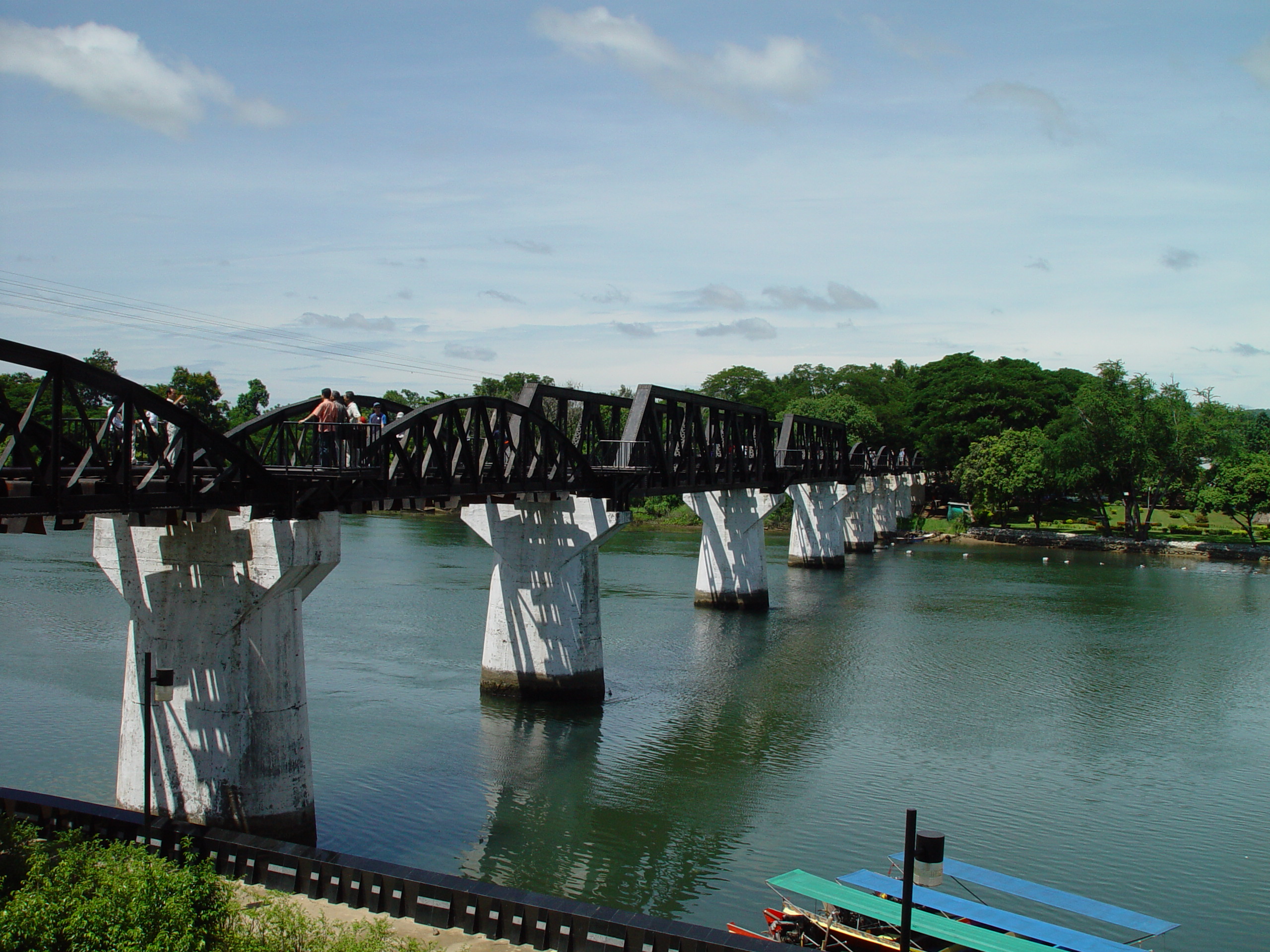
The Bridge over the River Kwai


Kanchanaburi (Thai: กาญจนบุรี (Pronunciation)) is a town (thesaban mueang) in the west of Thailand and the capital of Kanchanaburi province. In 2006 it had a population of 31,327. The town covers the complete tambon Ban Nuea and Ban Tai and parts of Pak Phraek and Tha Makham, all of Mueang Kanchanaburi district, and parts of the tambon Tha Lo of Tha Muang district

Kanchanaburi War Cemetery

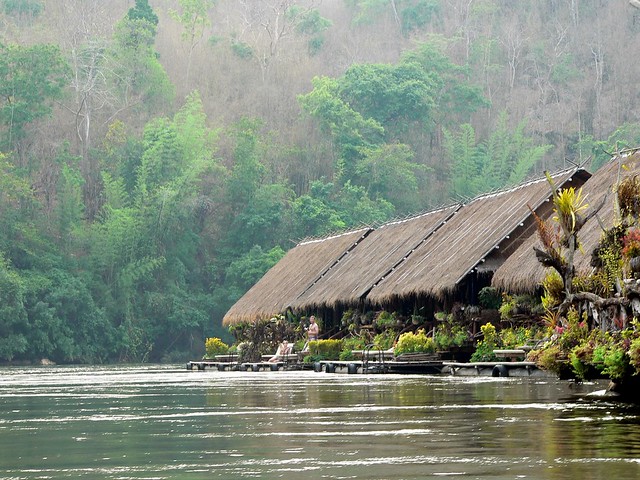
Kanchanaburi, which is located where the Khwae Noi and Khwae Yai rivers converge into the Mae Klong river, spans the northern banks of the river and is a popular spot for travelers, its location at the edge of a mountain range keeping it much cooler than the other provinces of central Thailand.

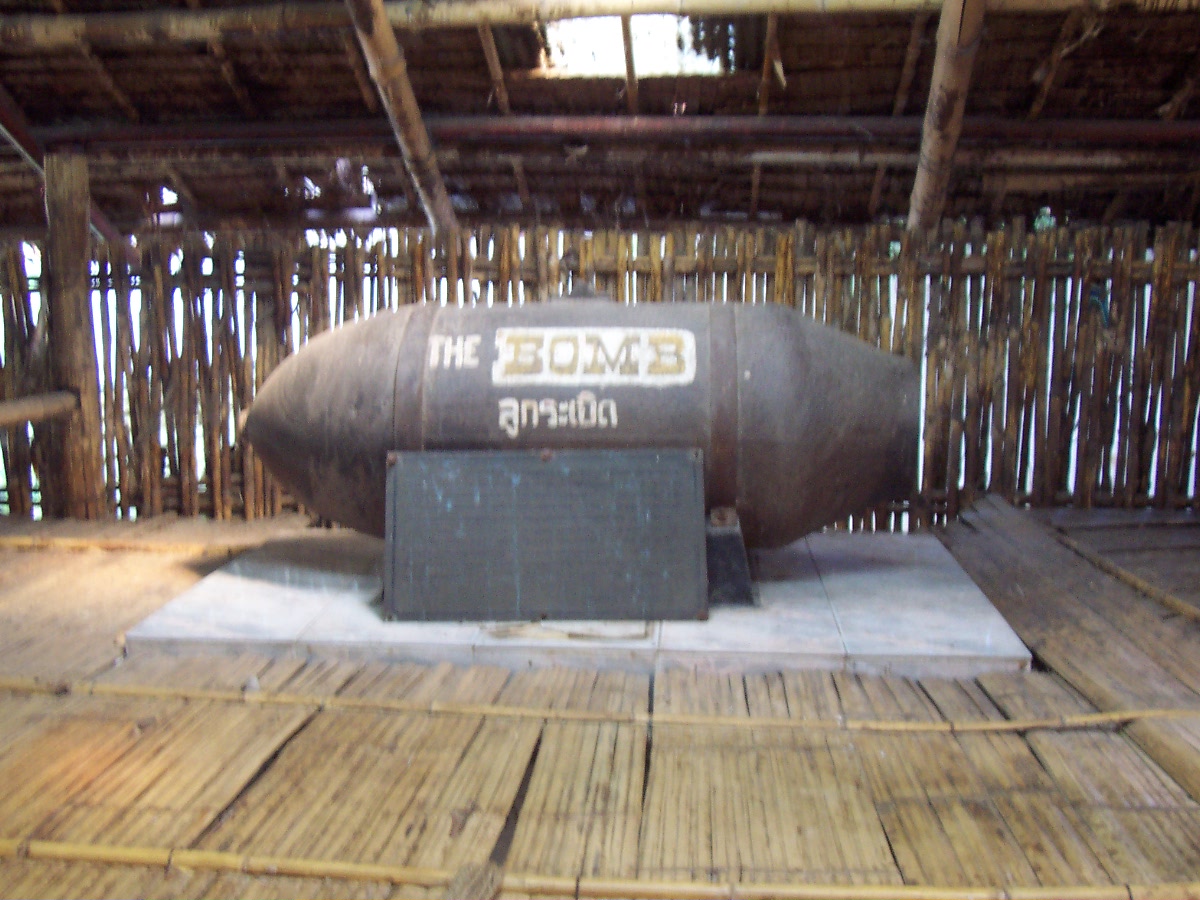
A military exhibit at the JEATH war museum, Kanchanaburi.

 The city has two major commercial districts: the downtown area consists of a grid of several streets with office buildings, shop fronts, and a shopping mall; and the riverfront area businesses are mostly located further west along River Kwai Road.
Guanyin, the statue of the goddess of mercy, next to the bridge over the river Kwai site.

 Once a year a carnival comes to town and is set up in the area next to the bridge. At night there is a small pyrotechnics display that re-enacts the wartime bombing of the bridge.
Bridge over the river Kwai

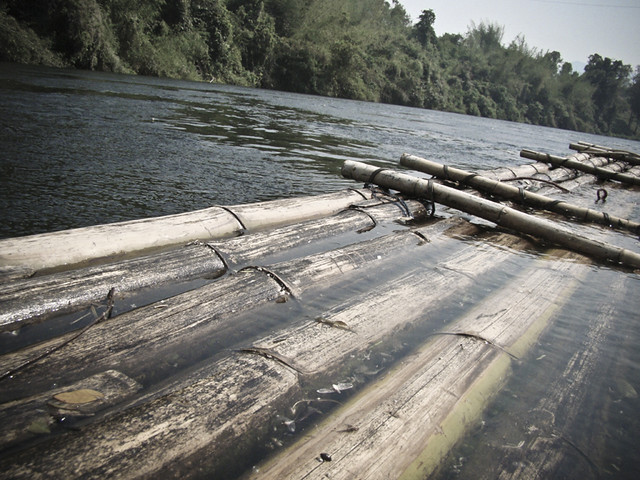
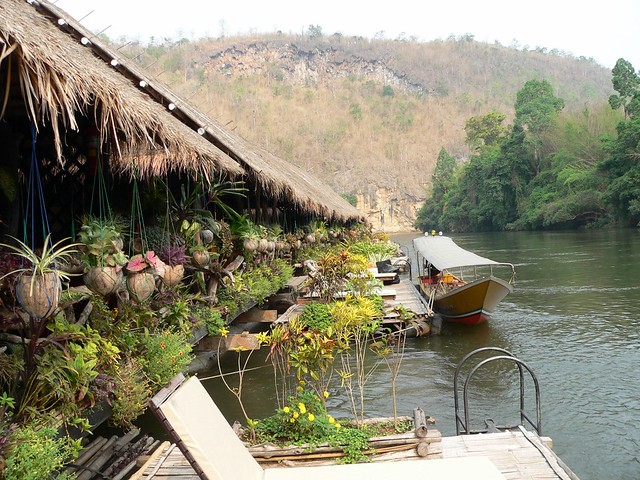
Scenery surrounding the bridge over the river Kwai


Ayutthaya


Ayutthaya (full name Phra Nakhon Si Ayutthaya, Thai: พระนครศรีอยุธยา, pronounced [pʰráʔ náʔkʰɔ̄ːn sǐː ʔājúttʰājāː]; also spelled "Ayudhya") city is the capital of Ayutthaya province in Thailand. The city was founded in 1350 by King U Thong, who went there to escape a smallpox outbreak in Lop Buri and proclaimed it the capital of his kingdom, often referred to as the Ayutthaya kingdom or Siam.


 It is estimated that Ayutthaya by the year 1600 CE had a population of about 300,000, with the population perhaps reaching 1,000,000 around 1700 CE, making it one of the world's largest cities at that time.
 
In 1767 the city was destroyed by the Burmese army, resulting in the collapse of the kingdom. The ruins of the old city now form the Ayutthaya historical park, which is recognized internationally as a UNESCO World Heritage Site. The city was refounded a few kilometers to the east. The city is sometimes called "Venice of the East"


Phuket


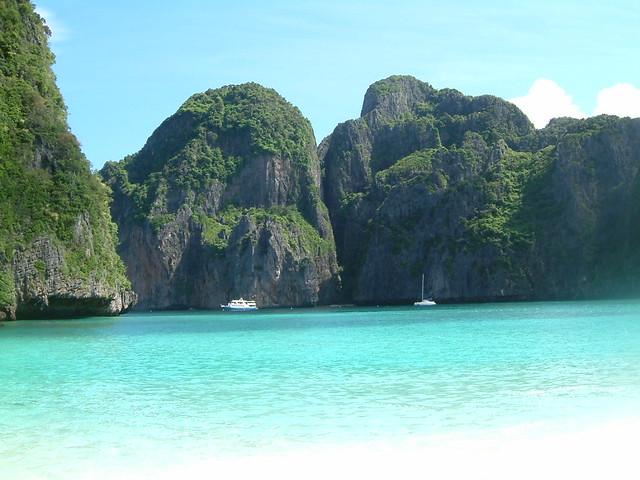
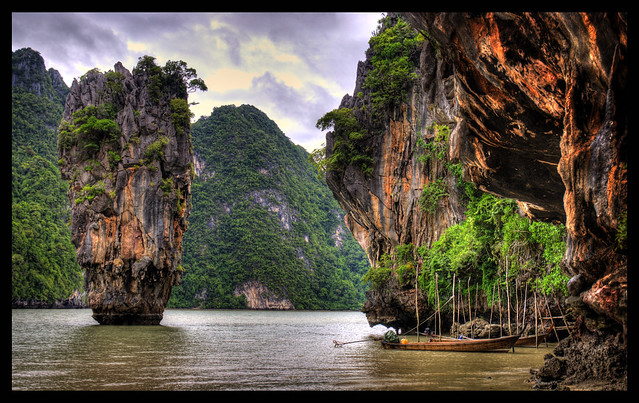
Phuket is a city located in the southeast of Phuket Island, Thailand. It is the capital of the Phuket Province, covering all of the island. As of 2007 the city has a population of 75,573 people. It covers the subdistricts (tambon) Talat Yai (Thai: ตลาดใหญ่) and Talat Nuea (Thai: ตลาดเหนือ) of Mueang Phuket district.


Climate
Under the Koppen climate classification, Phuket features a tropical monsoon climate. Due to its proximity to the equator, in the course of the year, there is little variation in temperatures. The city has an average annual high of 32°C (90°F) and an annual low of 24°C (75°F).


 Phuket has a dry season that runs from December through March and a wet season that covers the other eight months. However, like many cities that feature a tropical monsoon climate, Phuket sees some precipitation even during its dry season. Phuket averages roughly 2300 mm (92 in.) of rain annually.

 
Design by Free WordPress Themes | Bloggerized by Lasantha - Premium Blogger Themes | Best Buy Coupons