About

Showing posts with label UNITED KINGDOM. Show all posts

Monday, 8 August 2011

Snowdonia

Snowdonia National Park

Snowdonia (Welsh: Eryri) is a region in north Wales and a national park of 838 square miles (2,170 km2) in area. It was the first to be designated of the three National Parks in Wales, in 1951.


View of Llyn Llydaw from Crib Goch, Snowdonia National Park
Panorama of some of the Snowdon Massif including Snowdon (centre right) taken from Mynydd Mawr. The Glyderau are visible in the distance
Disused quarry near Llanberis in the foothills of the Glyderau


The Gwydir Forest lies in an elevated position, and offers views towards the Glyderau and the Carneddau ranges


Southern edge. Waymarked path near Llyn Barfog in Gwynedd
Rain coming in over Llyn Cowlyd north of Capel Curig

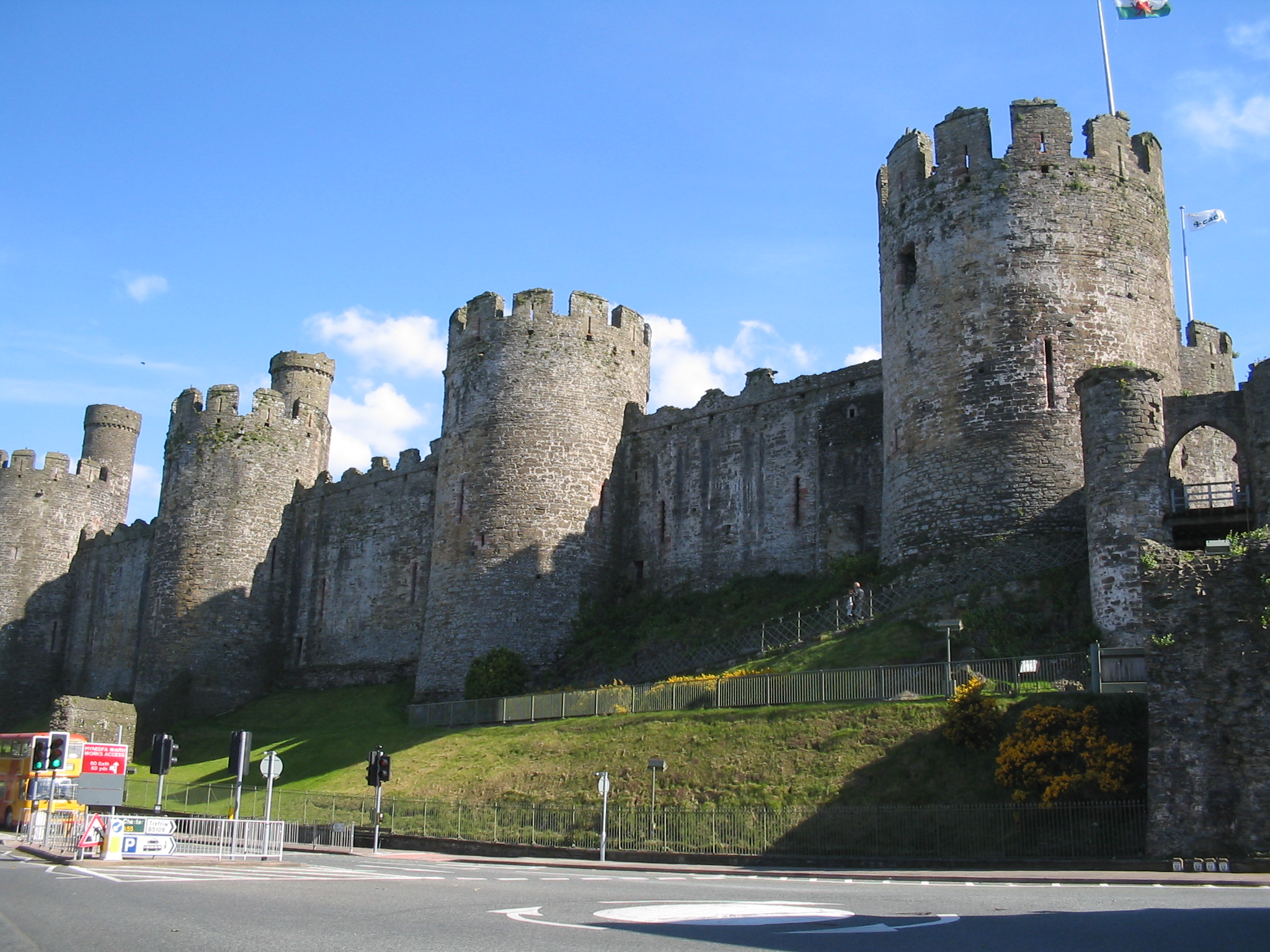
Wales - Conwy Castle


A view of the castle's massive defensive wall and its original gateway (right).

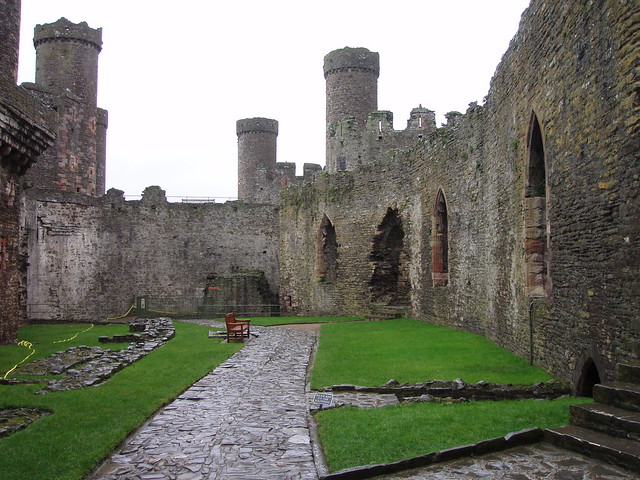
The outer ward of Conway Castle.

Conwy Castle defended the river and the town's harbour.

Conwy Castle (Medieval English: Conway Castle; Welsh: Castell Conwy) is a castle in Conwy, on the north coast of Wales. It was built between 1283 and 1289 [1] during King Edward I's second campaign in North Wales.
The 19th-century steel-box railway bridge was built with stone battlements to help it blend in with the adjacent medieval castle.


Conwy replaced Deganwy Castle, an earlier stronghold built by Henry III that had been destroyed by Llywelyn the Last in 1263.


A stepped ramp, at this point, led up to the castle's original gateway which had a portcullis and drawbridge.

The towers of the inner ward. These had additional turrets to improve defense of the Royal Apartments.
The outer ward which housed the Great Hall and the garrison's living quarters.
The North Wales Coast Line runs beneath the castle's southern walls.

The external walls of the outer ward. The remains of a privy, now fenced for safety, are next to the central tower

 
An external view of one of the inner ward's towers with its additional archers' turrets.


The castle, which was sited on a rocky promontory, for maximum defence and visible statement.

Wales - Castell Coch


Castell Coch (English: Red Castle) is a 19th-century Gothic Revival castle built on the remains of a genuine 13th-century fortification. It is situated on a steep hillside high above the village of Tongwynlais, to the north of Cardiff in Wales, and is a Grade I listed building as of 28 January 1963.

View of the castle walls

Designed by William Burges, with an impressively medieval appearance, working portcullis and drawbridge, and sumptuous interiors which rival those of Cardiff Castle, it has been described as "the most spectacular example of (that architect's) translation from High Gothic into High Victorian."
View of the interior

Lady Bute's Bedroom
The Three Fates Chimmneypiece

Wales - Cardiff Castle


Cardiff Castle is a medieval castle and Victorian architecture Gothic revival mansion, transformed from a Norman keep erected over a Roman fort in the Castle Quarter of Cardiff, the capital of Wales. The Castle is a Grade I Listed Building.


The Norman keep

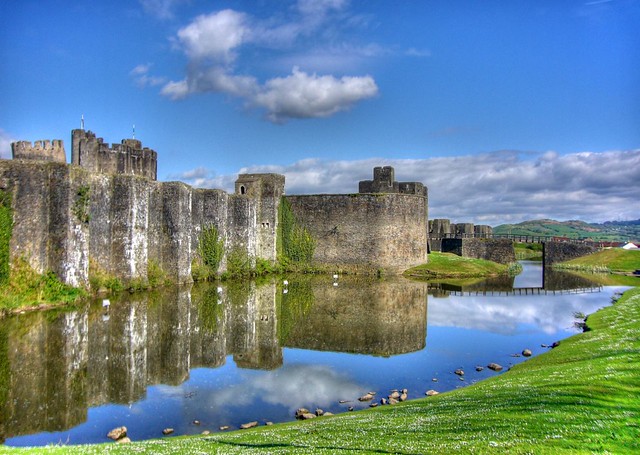
Caerphilly Castle

Caerphilly Castle and moat

Caerphilly Castle is a medieval castle that dominates the centre of the town of Caerphilly in south Wales. It is the largest castle in Wales and the second largest in Britain after Windsor Castle. Built mainly between 1268 and 1271 to stop Llywelyn ap Gruffudd's southward ambitions, it is an early example of a concentric castle with extensive water defences.

 
The restored tower

Detail of the south-east tower

The Great Hall interior

Replicas of siege engines


The castle deteriorated during several centuries of disuse. Its owners since 1766, the Marquesses of Bute undertook extensive restoration. During the 1930s, surrounding streets were levelled to restore the dominant view which had been obscured by town development. In 1950, the castle and grounds were handed over to the British government.

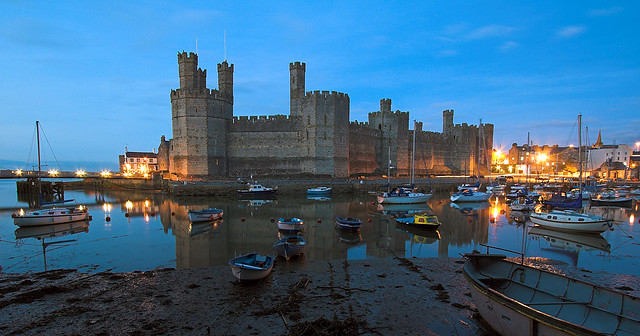
Wales - Caernarfon Castle

Caernarfon Castle from the west. The town's walls, which were mostly complete by 1285, join with the castle and continue off to the left of the photo

Caernarfon Castle is a medieval building in Gwynedd, north-west Wales. There was a motte-and-bailey castle in the town of Caernarfon from the late 11th century until 1283 when King Edward I of England began replacing it with the current stone structure.
The ward of Caernarfon Castle, showing (from left to right) the Black Tower, the Chamberlain's Tower, and the Eagle Tower. By the 17th century, the castle's domestic buildings had been stripped of valuable materials such as iron and lead

The Edwardian town and castle acted as the administrative centre of north Wales and as a result the defences were built on a grand scale. There was a deliberate link with Caernarfon's Roman past – nearby is the Roman fort of Segontium – and the castle's walls are reminiscent of the Walls of Constantinople.


The Eagle Tower
While the castle was under construction, town walls were built around Caernarfon. The work cost between £20,000 and £25,000 from the start until the end of work in 1330. Despite Caernarfon Castle's external appearance of being mostly complete, the interior buildings no longer survive and many of the building plans were never finished.
The unfinished rear of the King's Gate, the main entrance to the castle from the town

The town and castle were sacked in 1294 when Madog ap Llywelyn led a rebellion against the English. Caernarfon was recaptured the following year. During the Glyndŵr Rising of 1400–1415, the castle was besieged. When the Tudor dynasty ascended to the English throne in 1485, tensions between the Welsh and English began to diminish and castles were considered less important. As a result, Caernarfon Castle was allowed to fall into a state of disrepair.
Despite its dilapidated condition, during the English Civil War Caernarfon Castle was held by Royalists, and was besieged three times by Parliamentarian forces. This was the last time the castle was used in war. Caernarfon Castle was neglected until the 19th century when the state funded repairs. In 1911, Caernarfon Castle was used for the investiture of the Prince of Wales, and again in 1969. It is part of the World Heritage Site "Castles and Town Walls of King Edward in Gwynedd".

 
Design by Free WordPress Themes | Bloggerized by Lasantha - Premium Blogger Themes | Best Buy Coupons