About

Showing posts with label The United States. Show all posts

Wednesday, 3 August 2011

Atlanta - Michael C. Carlos Museum


The Michael C. Carlos Museum is an art museum located in Atlanta on the historic quadrangle of Emory University's main campus. The Carlos Museum has the largest ancient art collections in the Southeast,[1] including objects from ancient Egypt, Greece, Rome, the Near East, and the ancient Americas. The collections are housed in a Michael Graves designed building which is open to the public.

A Pre-Columbian incense burner with a crocodile lid (500 - 1350 CE), from the Carlos Museum's extensive collection of Central American artifacts

The Museum's collections comprise more than 16,000 works, and the facility attracts 120,000 visitors annually. In addition to permanent and temporary exhibitions, the Museum is a source of educational programming, providing lectures, symposia, workshops, performances, and festivals. The Carlos Museum also operates a teaching laboratory and conservation center, and publishes scholarly catalogues. The Museum also brings art, history, and archaeology to the classroom of Georgia children through its outreach program, Art Odyssey. The Carlos Museum also runs Odyssey Online, a Web site for school-age children that explores the various cultures reflected in the museum's collections.


One of the oldest museums in Georgia, the Museum's collections date back to 1876, when a general museum known as Emory College Museum was established on Emory University's original campus in Oxford, Georgia. After the university was relocated to Atlanta, a small group of professors officially founded the Emory University Museum in 1919. The collections were housed and displayed in various buildings around the campus.


Over the years, Atlanta businessman Michael C. Carlos donated over $20 million to create a permanent home for the museum, which opened in 1985. The museum was renamed again to the Emory University Museum of Art and Archaeology and was officially accredited by the American Association of Museums as a museum of antiquities and fine arts. Carlos died in December 2002 at the age of 75.


A major expansion in 1993 transformed the museum into one of Atlanta's top arts institutions. Upon the new building's opening, the museum became known as the Michael C. Carlos Museum, named after its most generous patron.

The museum's permanent Egyptian holdings were bolstered with the acquisition of 145 works from Canada's Niagara Falls Museum in 1999. The elaborately decorated ancient coffins and mummies of both humans and animals form the centerpiece of the permanent exhibition of ancient Egyptian art. Also in 1999, Carlos bequeathed a $10 million gift specifically for the purchase of ancient Greek and Roman pieces. As a result, the Museum now owns and exhibits the finest existing portrait of the Roman emperor Tiberius and one of the country's best examples of Hellenistic sculpture, a depiction of Terpsichore, the Greek muse of dance. A total of 450 works of art are now on display in galleries devoted to Greek and Roman art.


In 1999, the Carlos Museum purchased an unidentified male mummy that some thought could be a New Kingdom pharaoh. Through research and collaboration with Emory University medical experts, museum scholars were able to identify the mummy as pharaoh Ramesses I. The museum returned the mummy to Egypt in 2003 as a gift of goodwill and international cultural cooperation.


History

One of the oldest museums in Georgia, the Museum's collections date back to 1876, when a general museum known as Emory College Museum was established on Emory University's original campus in Oxford, Georgia. After the university was relocated to Atlanta, a small group of professors officially founded the Emory University Museum in 1919. The collections were housed and displayed in various buildings around the campus.


Over the years, Atlanta businessman Michael C. Carlos donated over $20 million to create a permanent home for the museum, which opened in 1985. The museum was renamed again to the Emory University Museum of Art and Archaeology and was officially accredited by the American Association of Museums as a museum of antiquities and fine arts. Carlos died in December 2002 at the age of 75.

A major expansion in 1993 transformed the museum into one of Atlanta's top arts institutions. Upon the new building's opening, the museum became known as the Michael C. Carlos Museum, named after its most generous patron.


The museum's permanent Egyptian holdings were bolstered with the acquisition of 145 works from Canada's Niagara Falls Museum in 1999. The elaborately decorated ancient coffins and mummies of both humans and animals form the centerpiece of the permanent exhibition of ancient Egyptian art. Also in 1999, Carlos bequeathed a $10 million gift specifically for the purchase of ancient Greek and Roman pieces. As a result, the Museum now owns and exhibits the finest existing portrait of the Roman emperor Tiberius and one of the country's best examples of Hellenistic sculpture, a depiction of Terpsichore, the Greek muse of dance. A total of 450 works of art are now on display in galleries devoted to Greek and Roman art.


In 1999, the Carlos Museum purchased an unidentified male mummy that some thought could be a New Kingdom pharaoh. Through research and collaboration with Emory University medical experts, museum scholars were able to identify the mummy as pharaoh Ramesses I. The museum returned the mummy to Egypt in 2003 as a gift of goodwill and international cultural cooperation.


On June 6, 2006 the museum purchased a headless statue Venus, for $968,000 at a Sotheby's auction in New York. A private collector in Houston, Texas, agreed to sell to whoever purchased the body, the head as well, which was last documented attached to the body in 1836. The head was sold for an additional $50,000.


Chicago


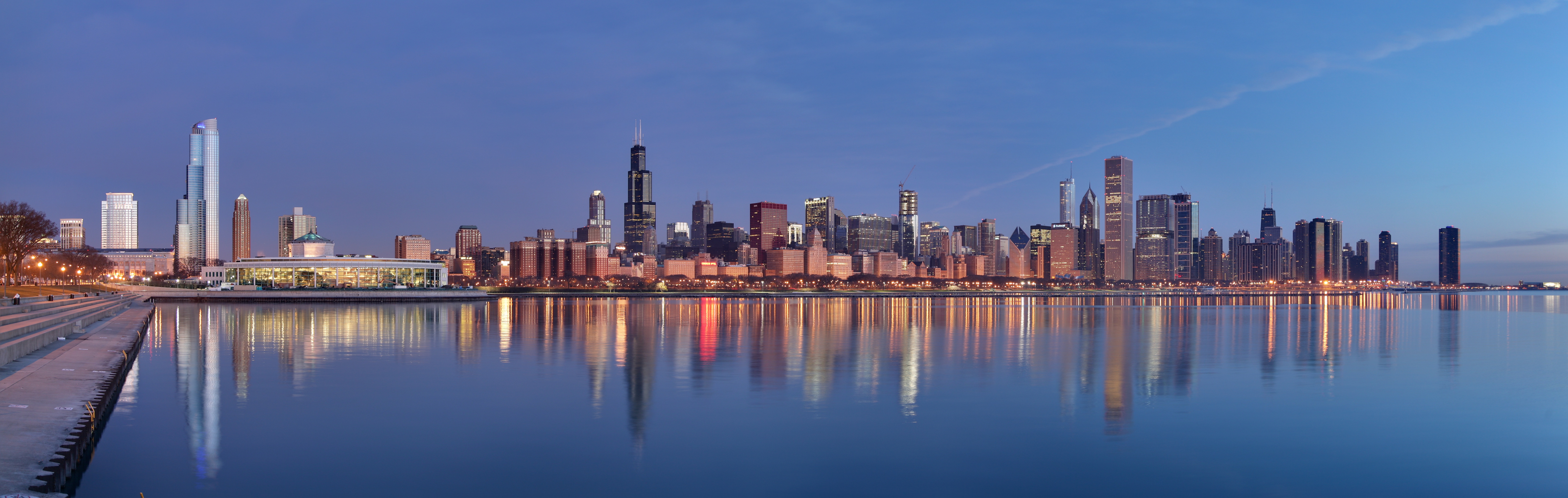
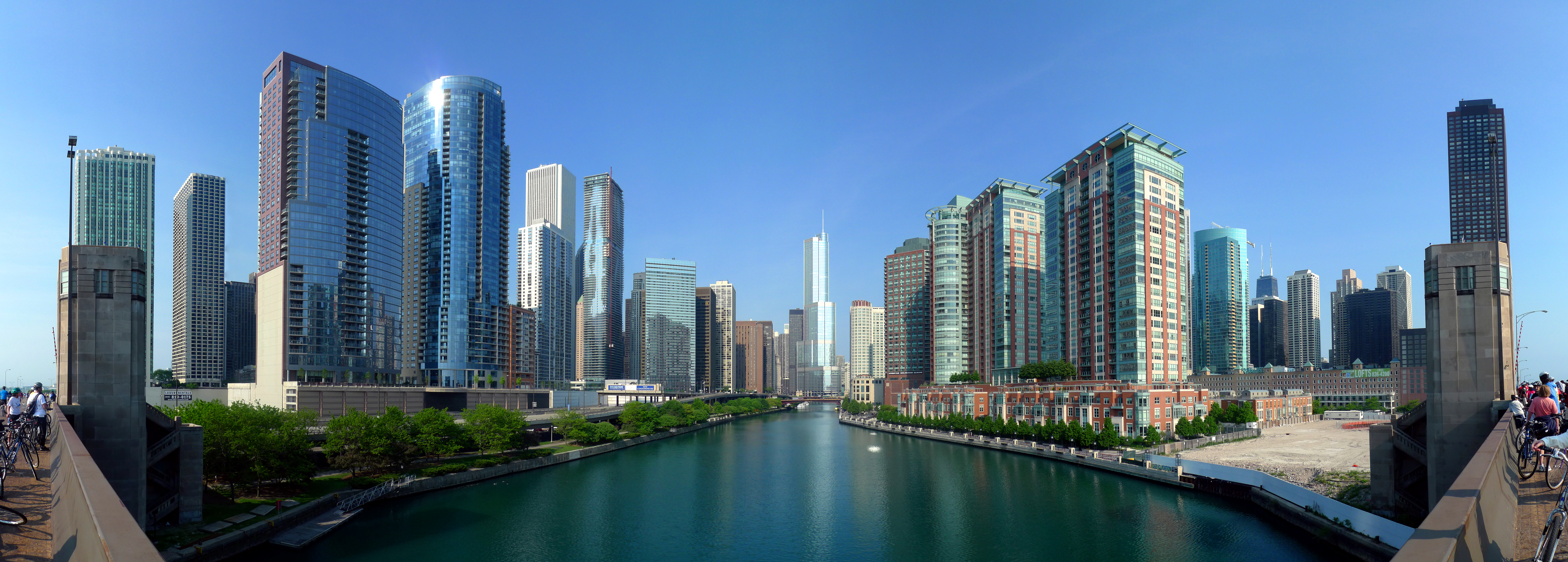
Chicago skyline from Northerly Island looking west.


Chicago is the largest city in the US state of Illinois. With nearly 2.7 million residents, it is the most populous city in the Midwestern United States and the third most populous in the USA,after New York City and Los Angeles. Its metropolitan area, commonly named "Chicagoland," is the 27th most populous urban agglomeration in the world, the largest in the Great Lakes Megalopolis, and the third largest in the United States, home to an estimated 9.5 million people spread across the US states of Illinois, Wisconsin, and Indiana. Chicago is the county seat of Cook County, the second most populous county in the United States, after Los Angeles County, California.

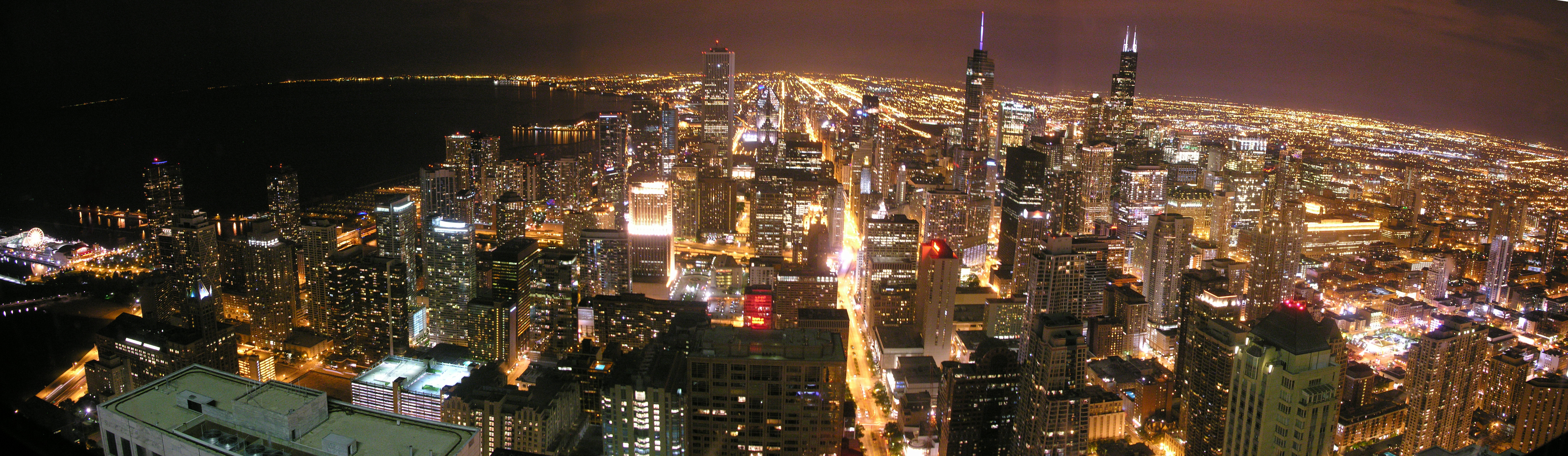
Chicago from John Hancock Center looking south


Chicago was founded in 1833, near a portage between the Great Lakes and the Mississippi River watershed.[8] Today, the city retains its status as a major hub for industry, telecommunications and infrastructure, with O'Hare International Airport being the second busiest airport in the world in terms of traffic movements. In 2008[update], the city hosted 45.6 million domestic and overseas visitors.[9] As of 2010, Chicago's metropolitan area has the 4th largest Gross Domestic Product (GDP) amongst world metropolitan areas.

Looking north from Wacker Drive at Trump Tower and the Wrigley Building, with John Hancock Center in the distance on the left side


The city is a center for business and finance and is listed as one of the world's top ten Global Financial Centers. The World Cities Study Group at Loughborough University rated Chicago as an "alpha world city".[11] In a 2010 survey collaboration between Foreign Policy and A.T Kearney ranking cities, Chicago ranked 6th, just after Paris and Hong Kong.[10] The ranking assesses five dimensions: value of capital markets, diversity of human capital, international information resources, international cultural resources, and political influence. Chicago has been ranked by Forbes as the world's 5th most economically powerful city. Chicago is a stronghold of the Democratic Party and has been home to many influential politicians, including the current President of the United States, Barack Obama.


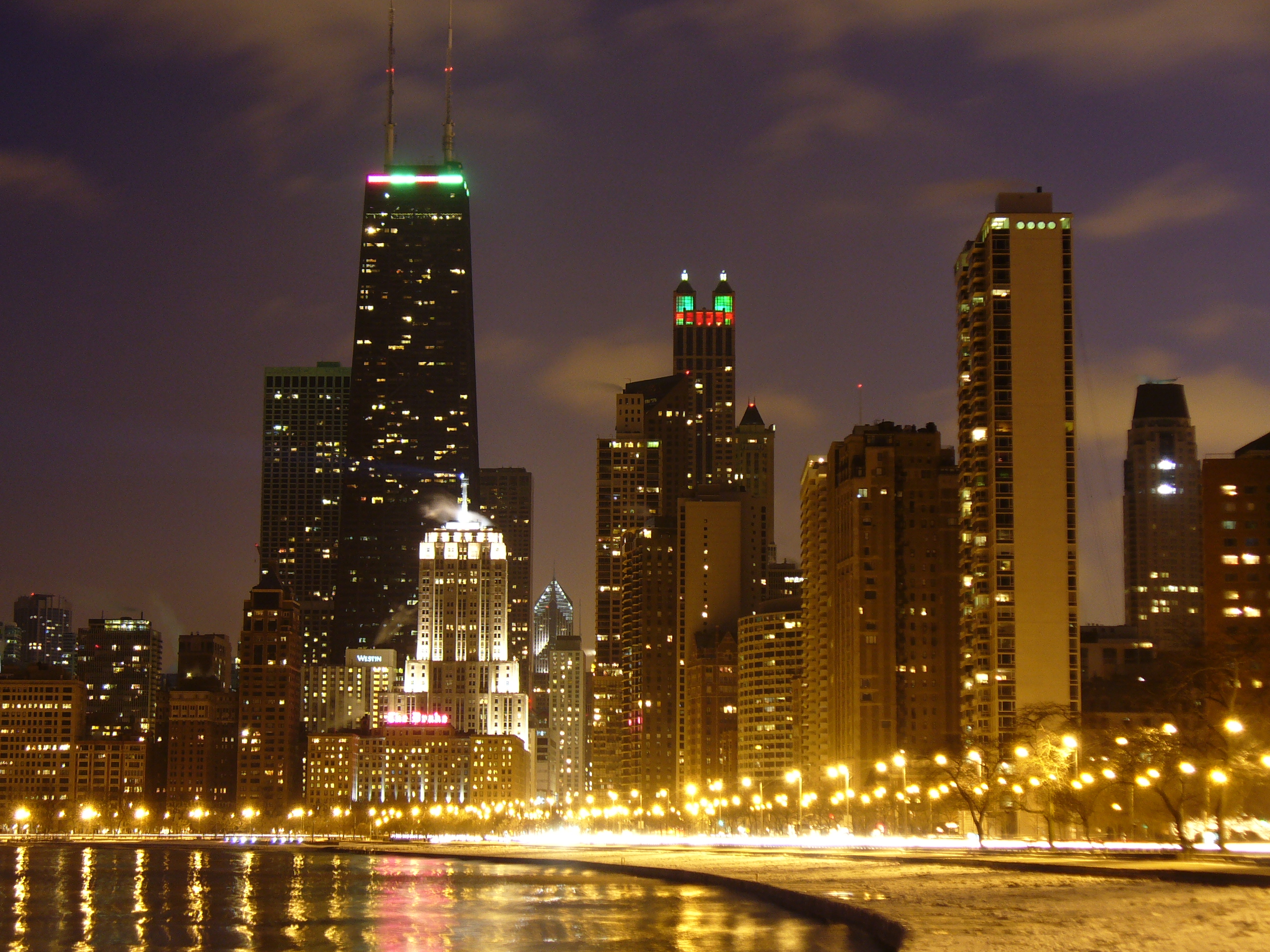
North Lake Shore Drive and the Gold Coast, Chicago


The city's notoriety expressed in popular culture is found in novels, plays, movies, songs, various types of journals (for example, sports, entertainment, business, trade, and academic), and the news media. Chicago has numerous nicknames, which reflect the impressions and opinions about historical and contemporary Chicago. The best known include: "Chi-town," "Windy City," "Second City,"[footnote 1] and the "City of Big Shoulders."[footnote 2] Chicago has also been called "the most American of big cities."


Chicago Theatre


Entertainment, The Arts, And Performing Arts

The Chicago TheatreChicago's theatre community spawned modern improvisational theatre.[54] Two renowned comedy troupes emerged—The Second City and I.O. (formerly known as ImprovOlympic). Renowned Chicago theater companies include the Steppenwolf Theatre Company (on the city's north side), the Goodman Theatre, and the Victory Gardens Theater. Chicago offers Broadway-style entertainment at theaters such as Ford Center for the Performing Arts Oriental Theatre, Bank of America Theatre, Cadillac Palace Theatre, Auditorium Building of Roosevelt University, and Drury Lane Theatre Water Tower Place. Polish language productions for Chicago's large Polish speaking population can be seen at the historic Gateway Theatre in Jefferson Park. Since 1968, the Joseph Jefferson Awards are given annually to acknowledge excellence in theater in the Chicago area.


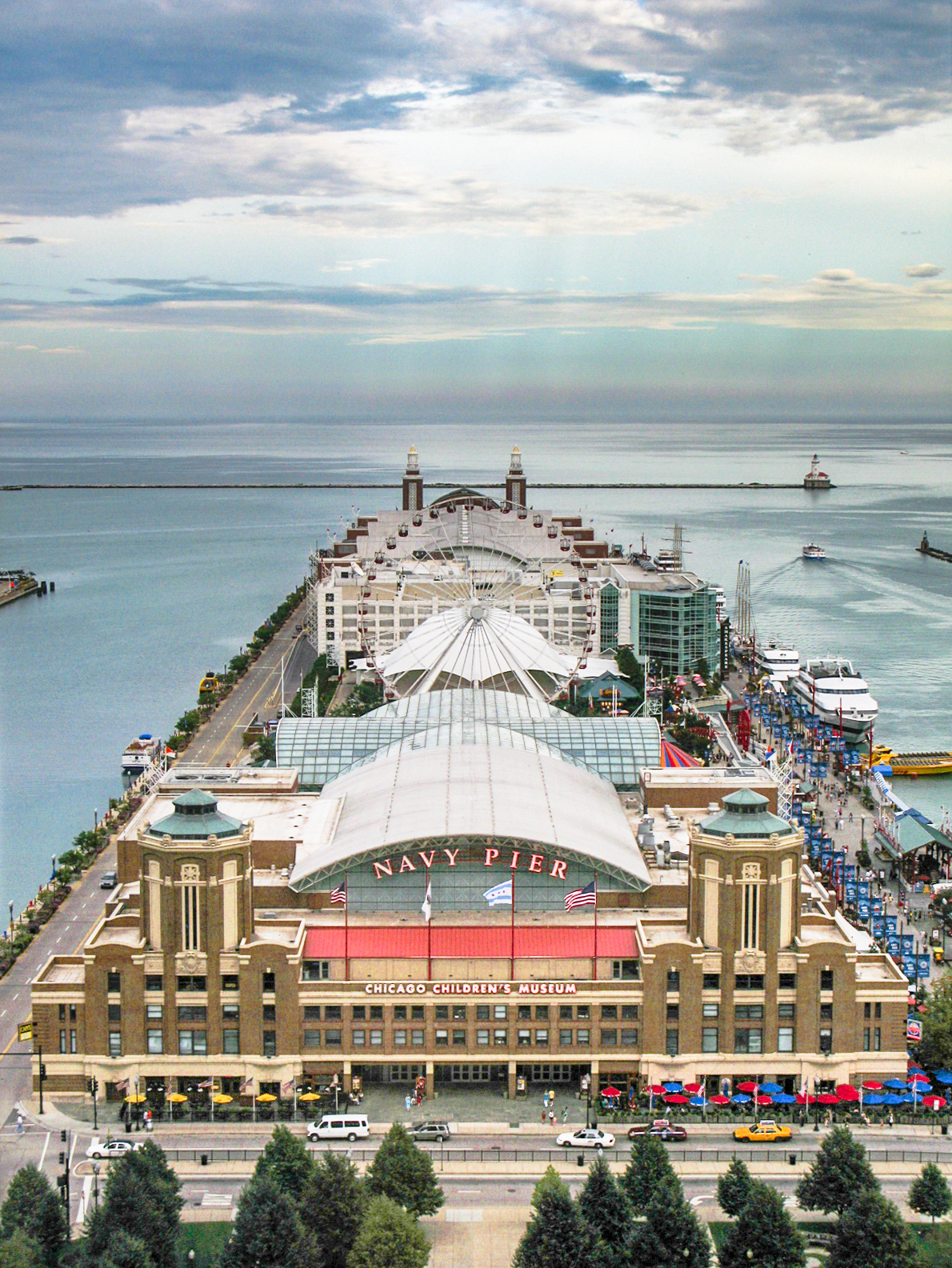
View of Navy Pier from the 23rd floor of Lake Point Tower

Classical music offerings include the Chicago Symphony Orchestra, recognized as one of the best orchestras in the world,[55] which performs at Symphony Center. Also performing regularly at Symphony Center is the Chicago Sinfonietta, a more diverse and multicultural counterpart to the CSO. In the summer, many outdoor concerts are given in Grant Park and Millennium Park. Ravinia Park, located 25 miles (40 km) north of Chicago, is also a favorite destination for many Chicagoans, with performances occasionally given in Chicago locations such as the Harris Theater.

File:Chicago community areas map.svg
Chicago Community Areas


The Civic Opera House is home to the Lyric Opera of Chicago. The Lithuanian Opera Company of Chicago was founded by Lithuanian Chicagoans in 1956,[56] and presents operas in Lithuanian. It celebrated fifty years of existence in 2006, and operates as a not-for-profit organization. It is noteworthy for performing the rarely staged Rossini's William Tell (1986) and Ponchielli's I Lituani (1981, 1983 and 1991), and also for contributing experienced chorus members to the Lyric Opera of Chicago. The opera Jūratė and Kastytis by Kazimieras Viktoras Banaitis was presented in Chicago in 1996.


Solider Field


The Joffrey Ballet and Chicago Festival Ballet perform in various venues, including the Harris Theater in Millennium Park. Chicago is home to several other modern and jazz dance troupes, such as the Hubbard Street Dance Chicago.

Other live music genre which are part of the city's cultural heritage include Chicago blues, Chicago soul, jazz, and gospel. The city is the birthplace of house music and is the site of an influential hip-hop scene. In the 1980s, the city was a center for industrial, punk and new wave. This influence continued into the alternative rock of the 1990s. The city has been an epicenter for rave culture since the 1980s. A flourishing independent rock music culture brought forth Chicago indie. Annual festivals feature various acts such as Lollapalooza, the Intonation Music Festival and Pitchfork Music Festival.


Wrigley Field


Chicago has a distinctive fine art tradition. For much of the twentieth century it nurtured a strong style of figurative surrealism, as in the works of Ivan Albright and Ed Paschke. In 1968 and 1969, members of the Chicago Imagists, such as Roger Brown, Leon Golub, Robert Lostutter, Jim Nutt, and Barbara Rossi produced bizarre representational paintings. Today Robert Guinan paints gritty realistic portraits of Chicago people which are popular in Paris, although he is little known in Chicago itself.

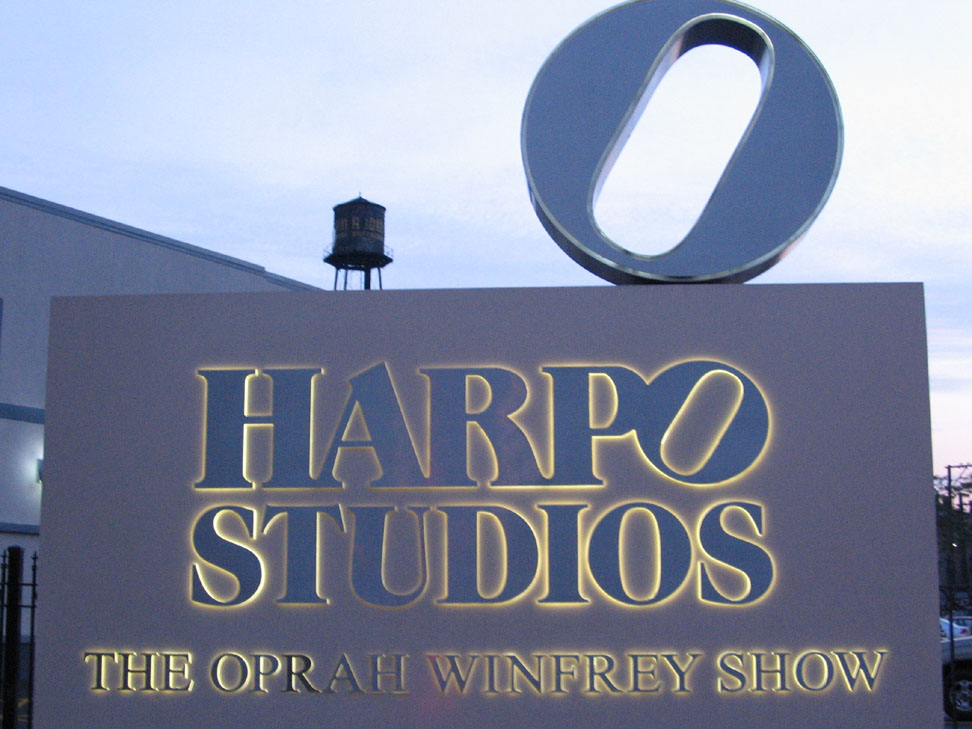
Harpo Studio


Chicago is home to a number of large, outdoor works by well known artists. These include the Chicago Picasso, Miró's Chicago, Flamingo and Flying Dragon by Alexander Calder, Monument with Standing Beast by Jean Dubuffet, Batcolumn by Claes Oldenburg, Cloud Gate by Anish Kapoor, Crown Fountain by Jaume Plensa, and the Four Seasons mosaic by Marc Chagall.
 
Chicago Harbor Lighthouse


Climate

The city lies within the humid continental climate zone, and experiences four distinct seasons. Summers are hot and humid, with a July daily average of 84.7 °F (29.3 °C). In a normal summer temperatures exceed 90 °F (32 °C) on 21 days.[48] Winters are cold, snowy, and windy, with some sunny days, and with a January average of 23.5 °F (−4.7 °C). Temperatures often (43 days) stay below freezing for an entire day, and subzero lows occur on eight nights per year.[48] Spring and fall are mild seasons with low humidity.

The Chicago River is the south border (right) of the Near North Side and Streeterville and the north border (left) of Chicago Loop, Lakeshore East and Illinois Center (from Lake Shore Drive's Link Bridge with Trump International Hotel and Tower at jog in the river in the center


According to the National Weather Service, Chicago's highest official temperature reading of 107 °F
(42 °C) was recorded on June 1, 1934 and July 11, 1936, both at Midway Airport. The lowest temperature of −27 °F (−33 °C) was recorded on January 20, 1985,[49] at O'Hare Airport. The city can experience extreme winter cold spells that may last for several consecutive days.

Public transportationThe Regional Transportation Authority (RTA) coordinates the operation of the three service boards: CTA, Metra, and Pace.

Aerial view of the Loop and the North Side with beaches lining the lakeshore


The Chicago Transit Authority (CTA) handles public transportation in the city of Chicago and a few adjacent suburbs outside of the Chicago city limits. The CTA operates an extensive network of buses and a rapid transit elevated and subway system known as the 'L' (for "elevated"), with lines designated by colors. These rapid transit lines also serve both Midway and O'Hare Airports. The CTA's rail lines consist of the Red, Blue, Green, Orange, Brown, Purple, Pink, and Yellow lines. Both the Red and Blue lines offer 24 hour service which makes Chicago one of the few cities in the world (and one of only three cities in the United States of America) to offer rail service every day of the year for 24 hours around the clock. A new rapid transit line, the Circle Line, is also in the planning stages by the CTA.


The Magnificent Mile hosts numerous upscale stores, as well as landmarks like the Chicago Water Tower


Metra, the nation's second-most used passenger regional rail network, operates an 11-line commuter rail service in Chicago and its suburbs. The Metra Electric Line shares its trackage with Northern Indiana Commuter Transportation District's South Shore Line, which provides commuter service between South Bend and Chicago. Pace provides bus and paratransit service in over 200 surrounding suburbs with some extensions into the city as well. A 2005 study found that one quarter of commuters used public transit.


Greyhound Lines provides inter-city bus service to and from the city, and Chicago is also the hub for the Midwest network of Megabus (North America).


Public Transportation

The Regional Transportation Authority (RTA) coordinates the operation of the three service boards: CTA, Metra, and Pace.

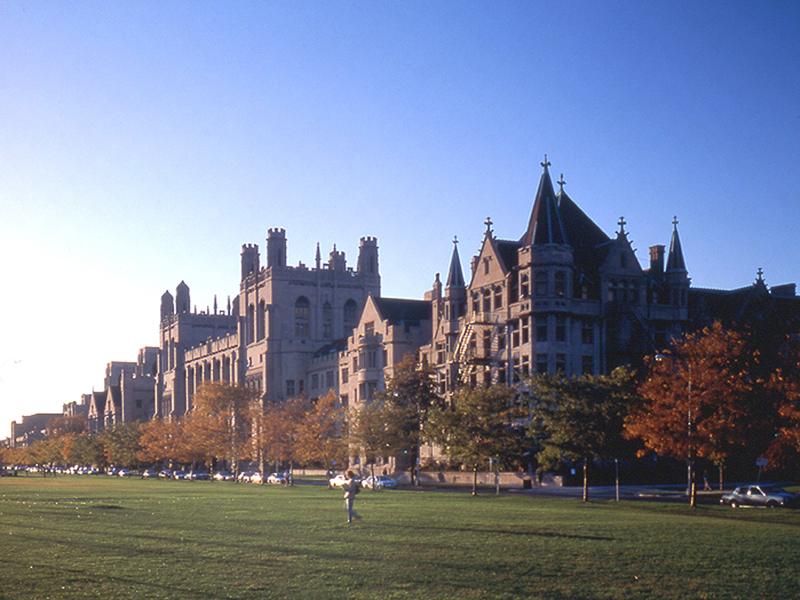
 The University of Chicago, as seen from the Midway Plaisance


The Chicago Transit Authority (CTA) handles public transportation in the city of Chicago and a few adjacent suburbs outside of the Chicago city limits. The CTA operates an extensive network of buses and a rapid transit elevated and subway system known as the 'L' (for "elevated"), with lines designated by colors. These rapid transit lines also serve both Midway and O'Hare Airports. The CTA's rail lines consist of the Red, Blue, Green, Orange, Brown, Purple, Pink, and Yellow lines. Both the Red and Blue lines offer 24 hour service which makes Chicago one of the few cities in the world (and one of only three cities in the United States of America) to offer rail service every day of the year for 24 hours around the clock. A new rapid transit line, the Circle Line, is also in the planning stages by the CTA.


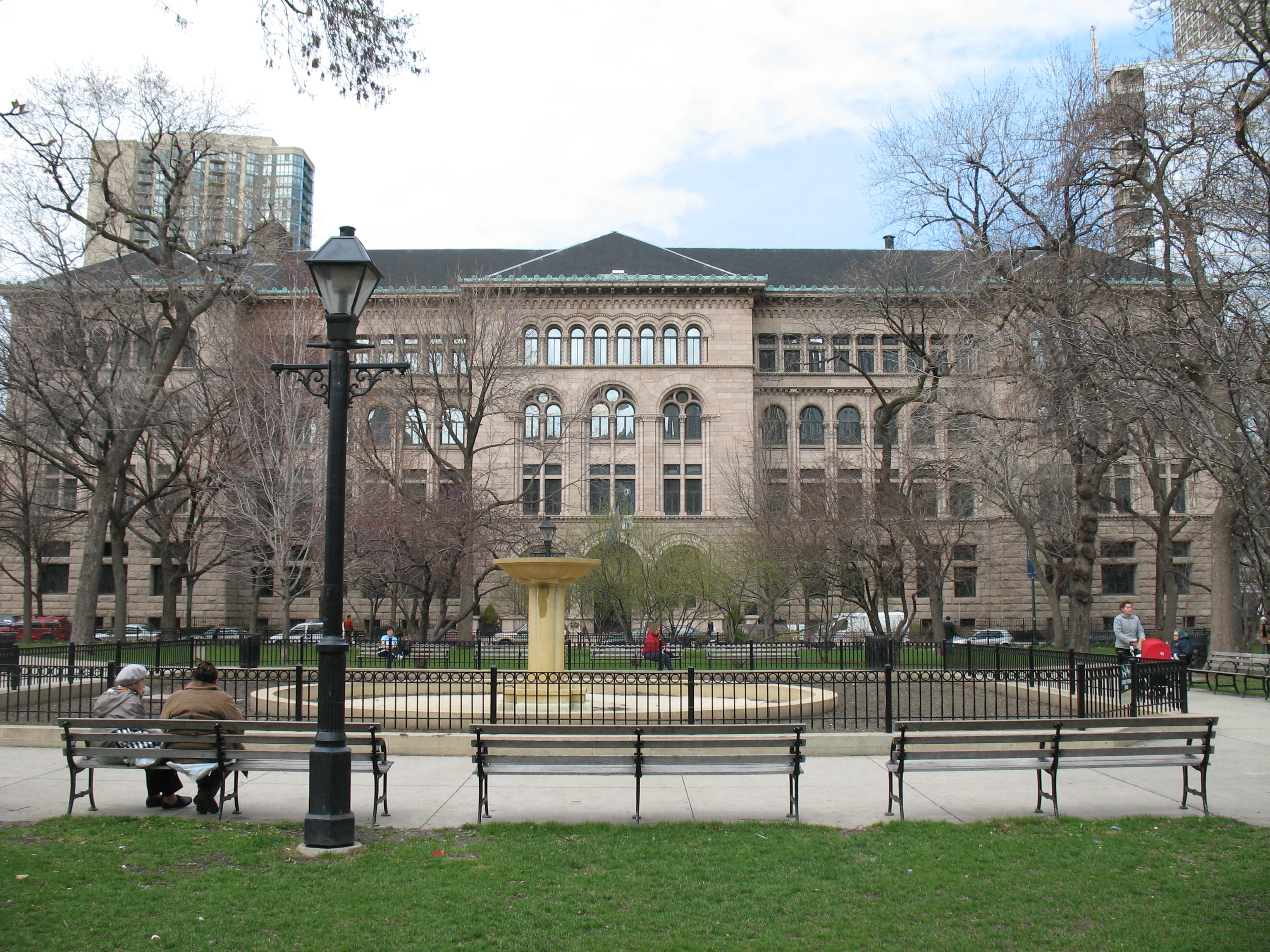
Washington Square Park on the Near North Side.


Metra, the nation's second-most used passenger regional rail network, operates an 11-line commuter rail service in Chicago and its suburbs. The Metra Electric Line shares its trackage with Northern Indiana Commuter Transportation District's South Shore Line, which provides commuter service between South Bend and Chicago. Pace provides bus and paratransit service in over 200 surrounding suburbs with some extensions into the city as well. A 2005 study found that one quarter of commuters used public transit.


St. Mary of the Angels, one of the city's "Polish Cathedrals" was intentionally modeled on St. Peter's Basilica


Greyhound Lines provides inter-city bus service to and from the city, and Chicago is also the hub for the Midwest network of Megabus (North America).


The "Gershwin Tunnel" at O'Hare Airport between concourses B and C in Terminal 1, operated by United Airlines


Air Transportation

The "Gershwin Tunnel" at O'Hare Airport between concourses B and C in Terminal 1, operated by United Airlines.Chicago is served by Midway International Airport on the South Side and O'Hare International Airport, the world's second busiest airport, on the far Northwest Side. In 2005, O'Hare was the world's busiest airport by aircraft movements and the second busiest by total passenger traffic (due to government enforced flight caps).[130] Both O'Hare and Midway are owned and operated by the City of Chicago. Gary/Chicago International Airport and Chicago Rockford International Airport, located in nearby Gary, Indiana and Rockford, Illinois, respectively, serve as alternate Chicago area airports. Chicago is the world headquarters for United Airlines, the world's second-largest airline by revenue-passenger-kilometers and the city is a hub for American Airlines. Midway is a hub for low-cost carrier Southwest Airlines

 
Night view of the Chicago Skyway tollbooths at the entrance to Chicago's southern city limits


Rail

Six of the seven Class I railroads meet in Chicago, with the exception being the Kansas City Southern Railway. As of 2002, severe freight train congestion caused trains to take as long to get through the Chicago region as it took to get there from the West Coast of the country (about 2 days).[120] About one-third of the country's freight trains pass through the city, making it a major national bottleneck.[121] Announced in 2003, the Chicago Region Environmental and Transportation Efficiency (CREATE) initiative is using about $1.5B in private railroad, state, local, and federal funding to improve rail infrastructure in the region to reduce freight rail congestion by about one third.[122] This is also expected to have a positive impact on passenger rail and road congestion, as well as create new greenspace.


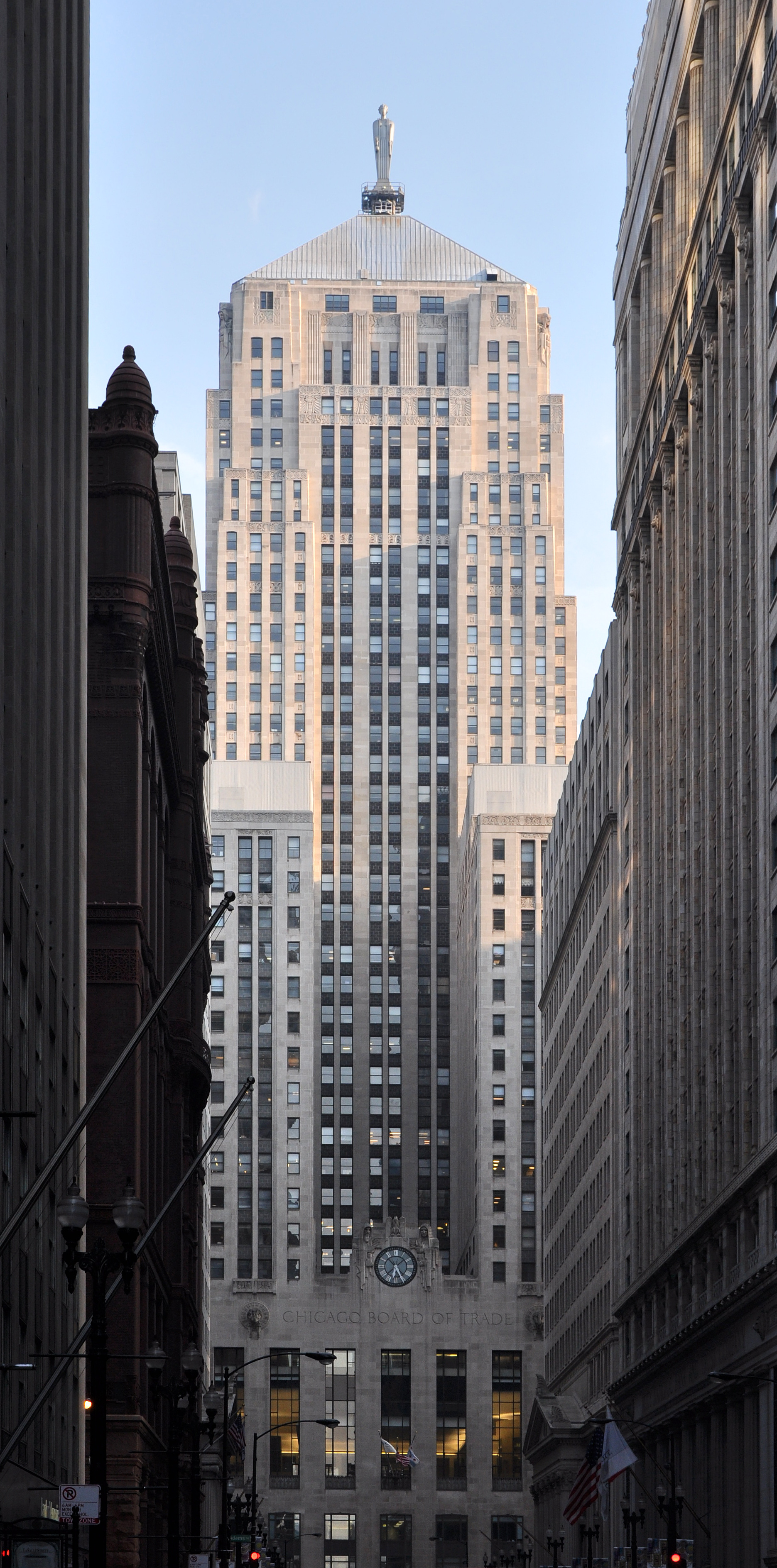
 The Chicago Board of Trade Building


Chicago is one of the largest hubs of passenger rail service in the nation. Many Amtrak long distance services originate from Union Station. The services terminate in San Francisco, Washington D.C., New York City, Indianapolis, New Orleans, Portland, Seattle, Milwaukee, Quincy, St. Louis, Carbondale, Boston, Grand Rapids, Port Huron, Pontiac, Los Angeles, and San Antonio. An attempt was made in the early 20th century to link Chicago with New York City via the Chicago – New York Electric Air Line Railroad. Parts of this were built, but it was ultimately never completed

Tuesday, 2 August 2011

Atlanta - Martin Luther King, Jr., National Historic Site


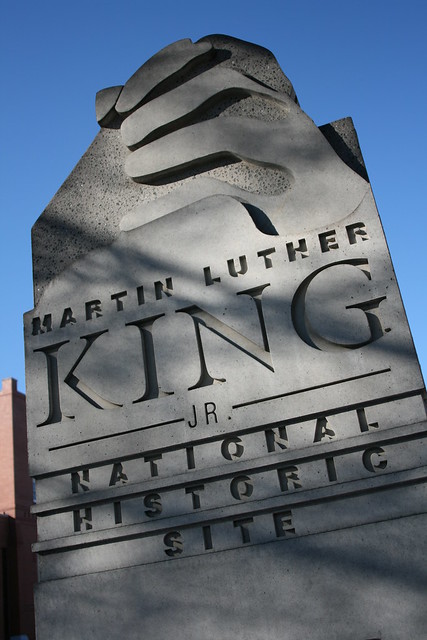
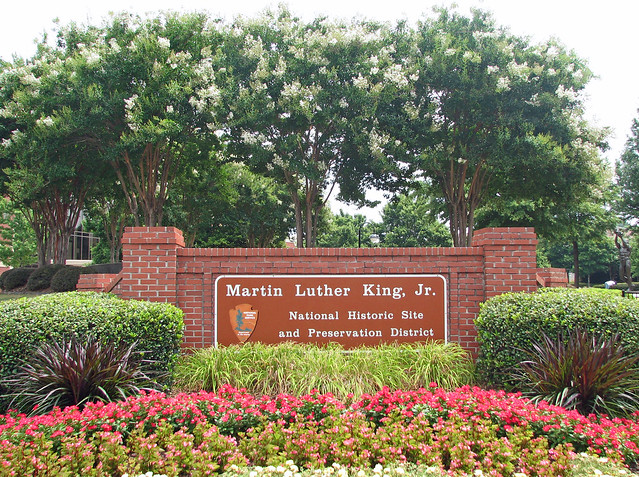
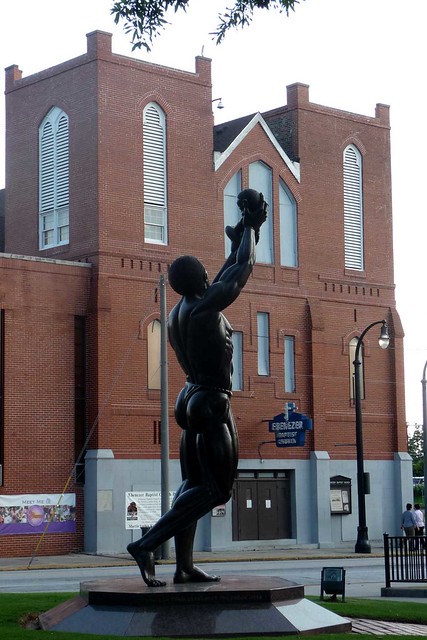
Martin Luther King, Jr., National Historic Site established on October 10, 1980, consists of several buildings surrounding Martin Luther King, Jr.'s boyhood home on Auburn Avenue in the Sweet Auburn historic district of Atlanta, Georgia. The original Ebenezer Baptist Church, the church where King and his father Martin Luther King, Sr. pastored, is also part of the national historic site. These places are critical components in the interpretation of the life of Martin Luther King Jr. and his legacy as a leader of the American civil rights movement.

Map of Martin Luther King Jr National Historic Site


In total, the buildings included in the site make up 35 acres (0.14 km²). The visitor center contains a museum that chronicles the American civil rights movement which follows the parallel paths of Dr. Martin Luther King, Jr.. A firehouse (Fire Station No. 6), built in 1894, served the Sweet Auburn community until 1991, and now contains a gift shop and an exhibit on desegregation in the Atlanta Fire Department.

The “I Have a Dream” International World Peace Rose Garden, and a memorial tribute to Mohandas K. Gandhi. Also of interest is the "International Civil Rights Walk of Fame" which gives recognition to those courageous pioneers who sacrificed and struggled to make equality a reality for all.


Atlanta - Margaret Mitchell House & Museum

File:Margaret Mitchell house atlanta 2006.jpg

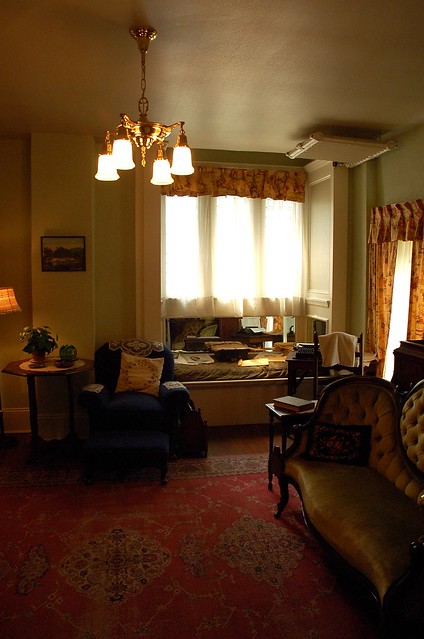
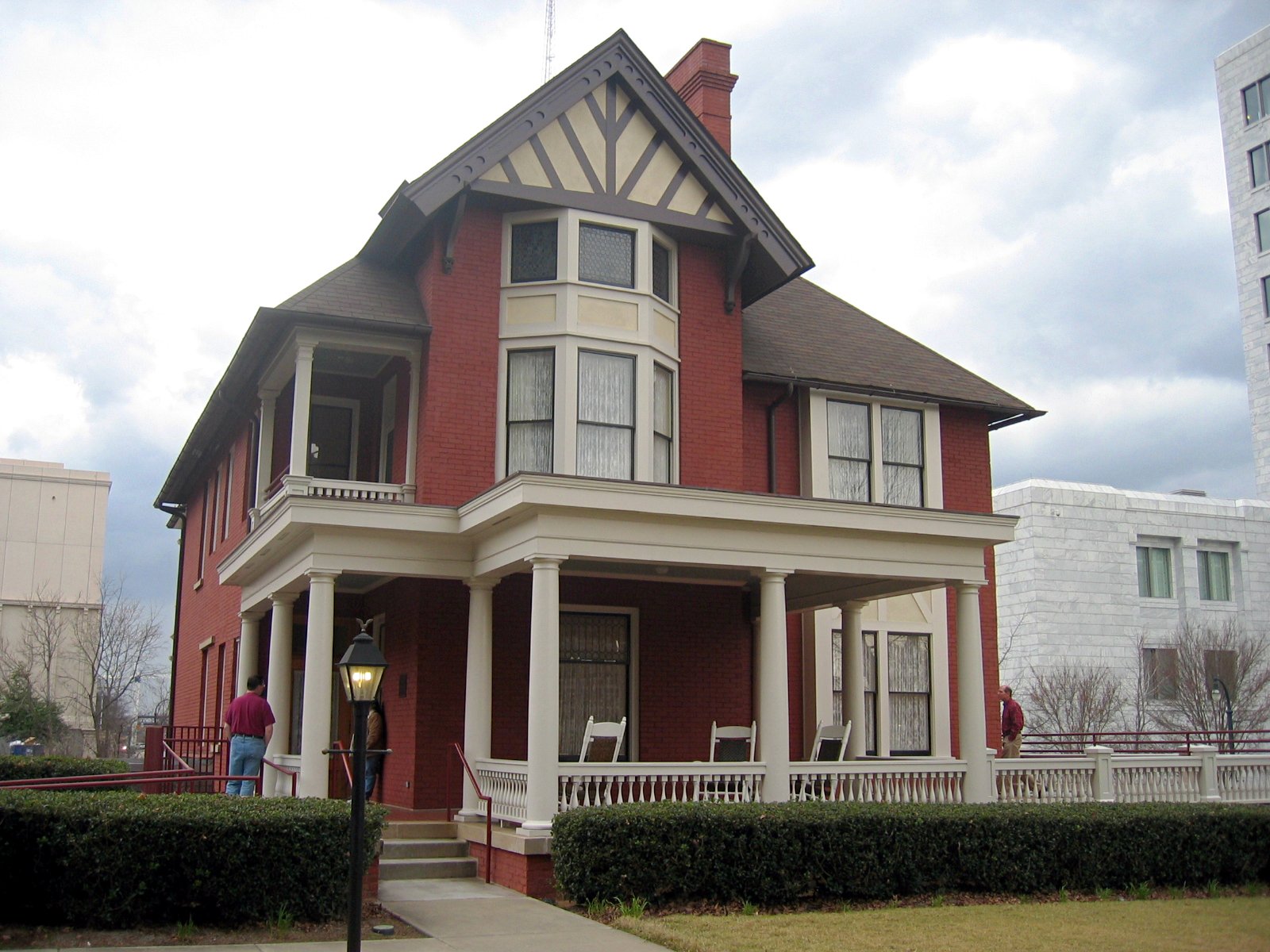
The Margaret Mitchell House is a historic house museum located in Atlanta. The structure was the home of author Margaret Mitchell. Located in Midtown, at 990 Peachtree Street, the house was known as the Crescent Apartments when Mitchell and her husband lived in Apt. 1 on the ground floor from 1925 to 1932. While living there, Mitchell wrote the bulk of her Pulitzer prize-winning novel, Gone with the Wind. The house also contains a Visitor Center, and a portion of the museum is wholly devoted to the filming of the 1939 film based on the book.
House history
The house was built as a single-family residence in 1899. Commercial development quickly overtook the neighborhood, however, and in 1907 the original family moved to Druid Hills. The house changed hands several times until the winter of 1913-1914 when the house was moved onto a new basement story constructed on the rear of the lot. Given a Crescent Avenue address, the building was remodeled in 1919 and converted into a ten-unit apartment building, known as the Crescent Apartments, and "three brick stores" were built where the house had originally sat. Located in what was then Atlanta's largest business district outside of downtown, close to trolley lines, and walking distance from her parents' house, the Crescent Apartments was home to Margaret Mitchell and John Marsh when they married in July 1925.
Unfortunately, the building's owner became over-extended, and it was sold at auction in 1926. The next owner, too, was driven to bankruptcy when the stock market crashed in 1929. Maintenance declined, contributing to Mitchell's characterization of their apartment as "the Dump." By the fall of 1931, there were only two occupied apartments in the building, one of which belonged to the Marshes, but they, too, moved to a larger apartment a few blocks away in the spring of 1932.

With a new owner, the Crescent Apartments were revived and continued to attract tenants until shortly after World War II. By then, the building was in poor condition, and in 1946 the porches were removed from the Crescent Avenue side of the building. (The original front porches were lost when the building was moved in 1913). By the 1950s, the building was mostly vacant and overdue for rehabilitation. There were a few commercial tenants, and the old apartments were popular with Georgia Tech students. In 1964, the opening nearby of Ansley Mall signaled the death knell for the old commercial district on Peachtree Street between 8th and 14th, but at the same time the Crescent Apartments got a much-needed rehab and were reborn as the Windsor House Apartments.

 In 1977, the last tenants were evicted and the building boarded up by a new owner who intended a major redevelopment of the area. By the time he and his company went bankrupt in the late 1980s, their only accomplishment was construction of a new office building at Tenth and W. Peachtree and the razing of dozens of historic buildings in the area. The old Crescent Apartments continued to deteriorate, especially after a fire was set in the southwest corner of the building did minor damage in the late 1980s. However, another fire, presumed to be arson, destroyed much of the building in September 1994.[3] At the time, the roof of the house was covered with thousands of rubber gloves as part of an off-site art installation related to the Piedmont Arts Festival, but this was not considered a factor in the extent of the damage.


Through the efforts of Mary Rose Taylor, total demolition of the building was averted, and with the corporate support of Daimler-Benz, restoration began in 1995 under the direction of the Atlanta architectural firm of Surber, Barber, Choate, and Hertlein. Because the commercial buildings on Peachtree were gone, the original Tudor Revival facade of the house was again visible and it was decided to restore that facade to its appearance before the house was moved in 1914. At the same time, the original Crescent Avenue facade of the Crescent Apartments would be restored so that visitors could experience the apartment building that Mitchell knew. In May 1996, days before it was slated to open as the Margaret Mitchell House Museum, arsonists struck again, and the building was again gutted by fire. Ironically, through the series of fires, Apartment #1 escaped with only minor damage. After the fire, restoration began anew, and the restored house finally opened to the public in 1997.

The house is included on the National Register of Historic Places.

Museum
Docents guide visitors through the house and the apartment to learn of Mitchell's life in Atlanta, of facts surrounding her writing the novel, and of how the book advanced toward publication in North America and in non-Anglophone countries.


In 1999, the Margaret Mitchell House acquired what had been a branch of a local bank, BankSouth, located across Crescent Avenue from the house. That building is now the movie museum. Several collectors of "GWTW" movie memorabilia have donated parts of their collections for display in the new museum. Among these artifacts are photos taken during the movie's 1939 premiere in Atlanta; the original entryway to the Hollywood movie set of the O'Hara home, Tara; and, recognizable to the movie's aficionados, the portrait of Scarlett O'Hara from the Butler Mansion.

The Museum is now owned and operated by the Atlanta History Center.

Atlanta - The Atlanta Cyclorama and Civil War Museum

File:Atlanta Cyclorama.jpg

The Atlanta Cyclorama and Civil War Museum is a civil war museum located in Atlanta, its most noted attraction being the Atlanta Cyclorama, a cylindrical panoramic painting of the American Civil War Battle of Atlanta. The museum is located in historic Grant Park, adjacent to Zoo Atlanta.


Atlanta Cyclorama
Visitors view the cylindrical painting from the inside, entering through an entrance in the floor. After being seated, the central cylinder rotates slowly affording a view of the entire painting. The painting at one time was the largest oil painting in the world, and if unrolled would measure 42 feet high by 358 feet long. It held this record until 2004, when it was surpassed in size by a mural at the Kalamazoo Air Zoo measuring 32 feet high by 800 feet long.


The painting depicts fierce fighting during the Civil War as Confederate defenders of Atlanta unsuccessfully counterattacked the Union army on July 22, 1864. The painting was commissioned after the end of the war as part of the political campaign of Vice Presidential candidate John A. Logan, who had commanded a large part of the Union forces in the battle. Thus, parts of the painting emphasize the heroism of Logan and other Union commanders.

One of several massive cycloramas depicting Civil War battles painted during the 1880s, the Battle of Atlanta painting was created by the American Panorama Company in Milwaukee by a team led by Germans Friedrich Wilhelm Heine and August Lohr. They also consulted Civil War artist and witness Theodore Davis, whom they painted into the work. It opened to display in Detroit, Michigan, in 1887.


The painting was sold and ended up in the hands of a traveling circus. When this circus came to Atlanta in the late 19th century, few Atlantans wished to see a Northern-biased painting that glorified the defeat that would lead to the destruction of their city. So, with little attendance, the circus went bankrupt, selling its assets including the painting and the animals. The animals became the founding attraction at Zoo Atlanta and the painting was housed in a wooden structure next to the zoo.

The museum was built in 1921 to house the painting. Designed by John Francis Downing, the neoclassical building was built in Grant Park. After a period of neglect, the painting and building were restored in the 1980s.


The Cyclorama was narrated at one time by volunteers, some of whom were veterans or widows of veterans of the Civil War. In 1960, Atlanta Mayor William B. Hartsfield accepted the donation of a recorded narration written by Junius Andrew Park, Jr., in honor of his father, Junius Andrew Park, Sr., who was born and raised in Atlanta. Research was done by Lurline Richardson Park, the writer's wife. The narration was musically scored by Atlanta musician Sam T. Wilhoit and the narration was read by Hollywood actor Victor Jory, who appeared in the original motion picture, Gone with the Wind. All parties donated their time and labor. In later years, a revised narration was produced and narrated by actor Shepperd Strudwick.


Civil War museum
The museum displays pictures and artifacts from the Civil War, including the Texas, a steam locomotive that pursued the captured train the General in the Great Locomotive Chase during the war. This raid was depicted in the 1927 Buster Keaton film The General and the 1956 Disney film The Great Locomotive Chase.
 

A movie theater inside the museum shows a short film about the Atlanta Campaign, narrated by James Earl Jones, to visitors before they view the painting. The cyclorama painting itself is augmented by a three-dimensional diorama in front of the painting and a narration of the events of the battle and the history of the painting. A popular story concerning the diorama involves actor Clark Gable. During the celebrations surrounding the opening of the film Gone with the Wind, the film's actors visited the Atlanta Cyclorama. Gable allegedly claimed that the only way the painting could be any more magnificent was if he were in it, prompting the management to add Gable's features to one of the sculptures in the diorama, that of a dying soldier.


Design by Free WordPress Themes | Bloggerized by Lasantha - Premium Blogger Themes | Best Buy Coupons